



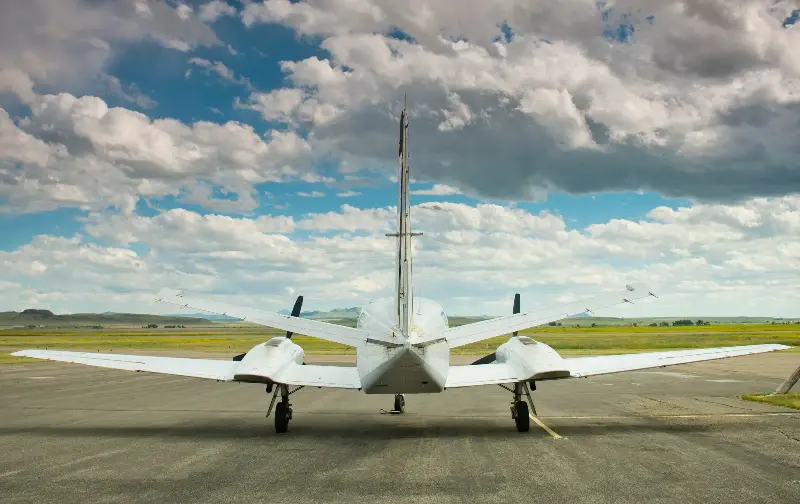
It’s a truth of modern life that the big city airport experience is both stressful and annoying.
But easyJet’s recent announcement of 13 new international routes from regional UK airports in 2027 – including to Geneva from minuscule Newquay, which operates just 10 flights per day – seems to confirm what I have long believed: that large airports are horrible, whereas very small airports are magnificent.
We’re all familiar with the hurdles and hassles standing in the way of an agreeable start to your holiday: the problem of airport parking, the snaking lines at security, the miles of tramping to far-flung departure gates (why is yours so often at the very end of the terminal?), the overwhelming pressure to consume and purchase inessential items – not to mention airport food and the endlessly creative ways it finds to be overpriced and disappointing.
Hold that thought, and imagine the very different user experience which the small airport can provide. You leave your car within a few steps of the terminal and there’s no charge for parking. At the check-in desk – one of just two open for flights this morning – there’s no queue. As the plane takes off, you can see your car down there in the car park.
You sink gratefully into your leather seat, lulled into sleep – if you are fortunate enough to be travelling in a suitably tiny plane – by the hum of propellers.
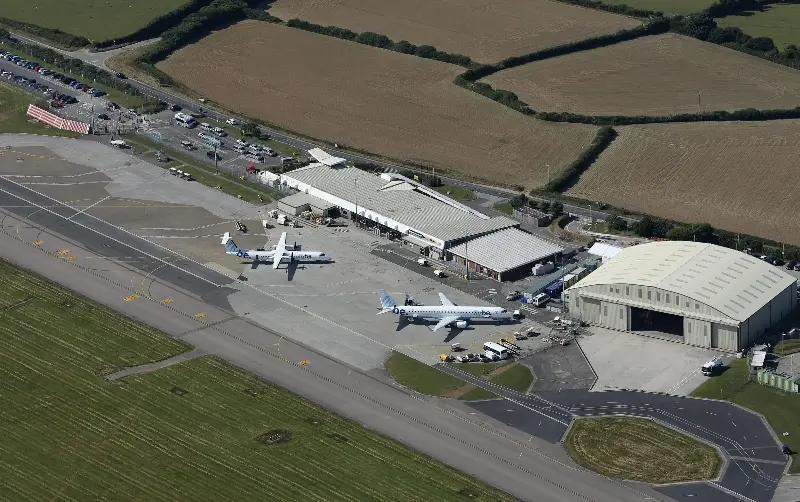
Tiny airports are so much preferable to big ones that they almost redeem the genre entirely. They summon up a folk memory of the way flying used to be in the days before mass tourism and low-cost airlines, when catching a plane was still a glamorous novelty.
Often, these diminutive airports have short runways that can only handle the smaller kind of turbo-prop planes, the D328s and Dash 8s, which have three or four plushly upholstered seats in each row.
Nancy Novogrod, the former editor in chief of Travel + Leisure magazine, once told me that she couldn’t afford to consider too deeply the misery that airports and aeroplanes increasingly involve, as it might impinge on her continued enjoyment of global travel.
I understand this, but for me, departures increasingly matter as much as arrivals. Perverse though it sounds, I would rather choose a destination that can be reached from a small airport, even if it’s somewhere not initially high on my wish list, than endure the hassle of a large airport to reach a first-choice city.
A while back, I discovered the enticing possibility of being able to reach Palma de Mallorca from a tiny airport nine miles outside Salamanca, 90 minutes from my home in Spain.
When I pitched up just before dawn for the early flight – the only one scheduled for that day – the terminal building was swathed in a blanket of morning mist. Security at Salamanca Airport was a cursory glance at my hand luggage; the single operative waved me through with a cheery smile.
In the cafeteria, a local lady cranked up the coffee machine, offering me a croissant from a bag she had brought in from town. Despite the mist, the plane took off on time.
The tiny airport often gets a bad rap because those who have long resigned themselves to the Very Big Airport Experience assume that they cannot get where they hope to go from a small airport. This is often not the case: many of them are astonishingly well connected.
From Norwich in the UK you can flit off to Rhodes, Jersey or Lapland: who knew? It turns out that Bournemouth, of all places, has year-round connections to Krakow, Malta and Madeira, while Barra in the Outer Hebrides offers just one flight (to Glasgow), but it’s still worth booking for the thrill of taking off from a sandy beach.
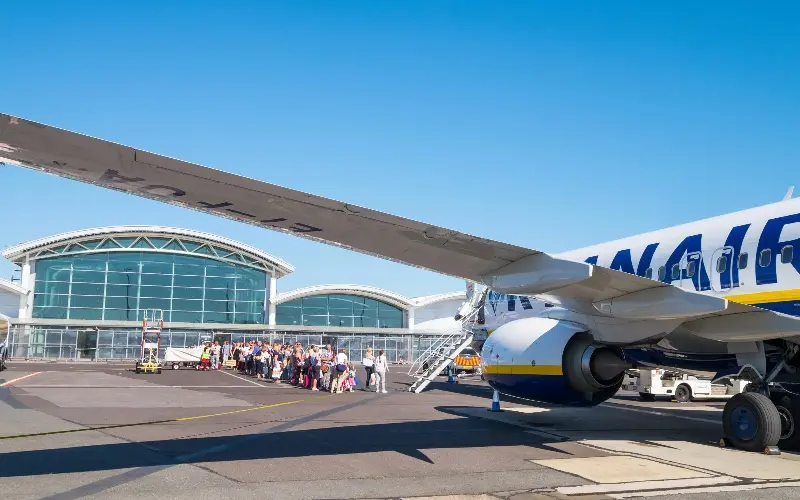
Another airport close to my home, Badajoz, stands in the middle of a maize plantation. From here, flights leave for Madrid and Barcelona, but also for Gran Canaria and Tenerife with the Canary Islands’ very own regional airline, Binter, locally beloved for its charming in-flight service and squeaky leather seats. Though Gran Canaria wasn’t somewhere I’d long dreamt of visiting, being able to get there from a tiny airport suddenly made it a powerfully attractive idea.
At airports such as Badajoz, there are none of the interminable car parks with their exorbitant charges, the shuttle services winding their way through dreary industrial suburbs. You simply leave your car near the door and walk to the terminal. (A friend of mine even cycles the three miles to Antwerp airport from his home in the city, leaving his bike locked up outside.)
At Valladolid, another pint-sized regional Spanish hub, I once left a book in the car, remembered at the boarding gate, and nipped back to fetch it. The duty-free shop at the tiny airport is no more overwhelming than a few shelves of local produce – handmade biscuits, a liqueur, packets of coffee – against a wall in the departure lounge.
The windows of your departure gate offer an up-close view of the plane as it lands, taxis to the gate, and debouches passengers and their bags. There’s something soothing about the immediacy of the experience, a sense that the process you’re embarking on – because it is directly perceptible, tangible almost – somehow lies within your control.
El Hierro, the least visited of the Canary Islands, has an airport with a runway which, were it any longer, would jut out like an aircraft carrier into the fierce Atlantic Ocean. Returning from a trip there earlier this year, I left my hire car in the dedicated parking place beside the terminal and, having cleared check-in within seconds, sat in the airport bar with a café con leche and a quesadilla.
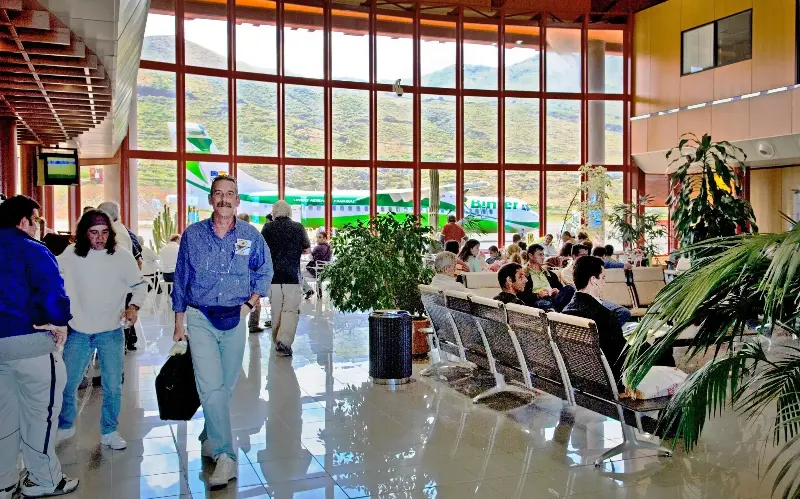
Couples sat at café tables while their children played on the plastic toboggans of a small playground a few metres away.
Compared with the alienating vastness of Heathrow or JFK, this was like sitting around in someone’s front room. The atmosphere had an almost domestic familiarity.
Observing the airport’s two departure gates from her vantage point behind the bar, the waitress offered a running commentary, like a human departure board, on the flights taking off from El Hierro for the larger islands of Tenerife and Gran Canaria.
“The Tenerife’s a bit late getting in today. The pilot had a dose of flu last week and he’s still getting over it,” she confided. “The other one should be boarding in a minute or two. Can I get you anything else in the meantime, mi amor? A nice cold cervecita, maybe?”
You don’t get that sort of customer service in the Dunkin’ at JFK.