



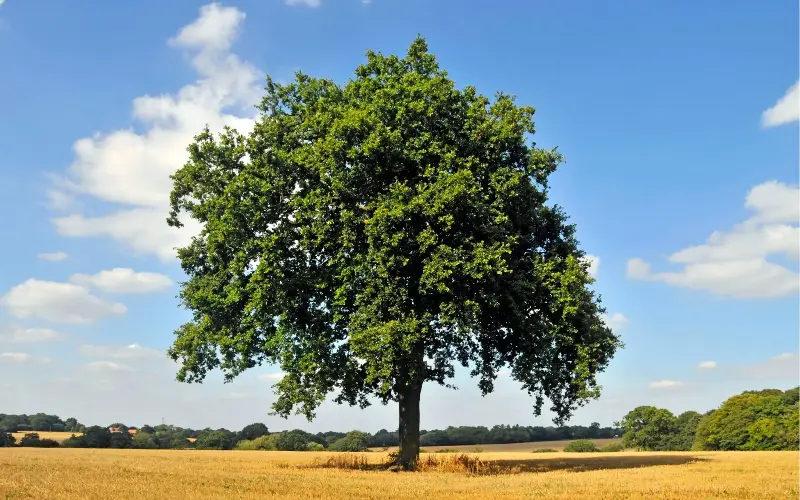
English oak trees are being replaced by foreign variants because they can no longer cope with the British heat, experts have warned.
Searing temperatures across the UK have forced tree nurseries to import oaks germinated in southern Europe, which are better equipped than home-grown trees at surviving hot weather.
Harry Hoblyn, from the Rymer Trees nursery in Barnham, Suffolk, said he was importing oaks from northern Portugal as home-grown oaks struggled with the heat.
“We’ve got to the point where our conditions are changing quicker than nature can evolve so we’re having to look further afield,” he said.
“[European oaks] have little holes that let air, gas, and water through and react much quicker to weather change so if it suddenly gets really hot, they shut immediately whereas the pores of home grown trees take quite a while to close up.”
Britain is experiencing record-breaking temperatures as parts of the country hit 37C on Thursday during the fifth heatwave of the summer.
English oaks can generally endure temperatures of 33C but anything above this causes them to experience a “false autumn” as leaves change colour and drop off.
Prolonged “heat stress” can also weaken trees, which may cause them to lose their branches.
The English oak, whose Latin name is Quercus Robur, is one of Britain’s most celebrated trees, supporting more than 2,300 different species of birds and insects as well as being a national symbol.
Despite the tree’s English connections, the species is also native to southern Europe. These varieties, however, are more drought resistant and can better withstand hot weather, prompting tree nurseries to import them to the UK.
Harriet Rix, a tree-science consultant, said: “If your oak has germinated in a hotter, dryer country, it is more likely to be resistant to hot, dry conditions.”
But she warned the imports were a “real threat in terms of new diseases” and that it was better to focus on the adaptation of home-grown trees.
“It is very easy for oaks to interbreed. Young oaks can produce lots of pollen and are very virile. This practice could change the gene pool significantly.”
Alongside English oaks, tree nurseries are also importing different types of southern European trees, including olive trees.
Gavin Lane, the president of the Country Land and Business Group, said: “We may start to see a move towards southern plants that are more tolerant of Mediterranean weather.”