



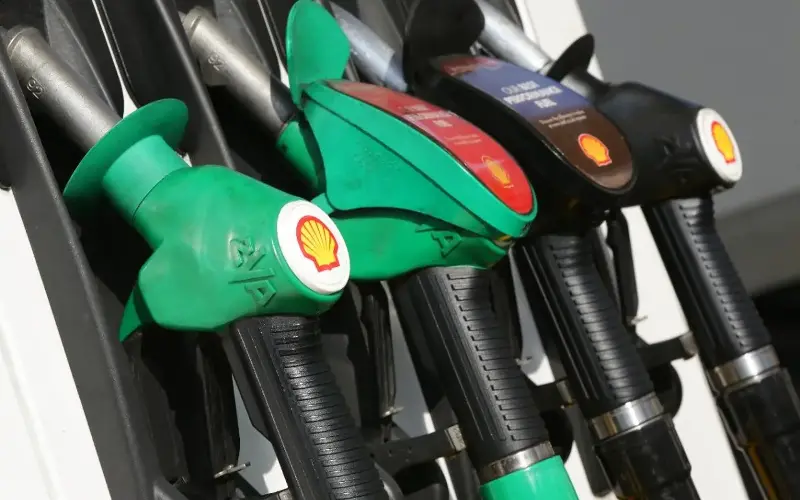
As the war in the Middle East sends oil prices surging, the AA is advising motorists to consider driving less to save fuel. According to the motoring group, drivers should “consider cutting out some non-essential journeys and changing their driving style to conserve fuel”.
Yet you needn’t hang up your car keys just yet, with a range of different ways to reduce fuel consumption.
Think of the accelerator as a tap
The more you press the accelerator pedal, the more fuel – whether petrol, diesel or electricity – will flow, like opening a tap. So the harder you accelerate, the more fuel you’ll use. It also means that if you’re in too high a gear, say fourth instead of third, and you have to push the accelerator down hard to maintain momentum, you’ll use more fuel than feathering the pedal in a lower gear.
Start weight watching
The more a car weighs, the more fuel it’ll use to move. The weight saving by removing the tool box you never use and the golf clubs that only come out at the weekend will surprise you. Experts have calculated that reducing the overall weight of your car by 5 per cent means it needs 5 per cent less energy to accelerate to a certain speed.
Don’t be a speed freak
The faster you drive, the more fuel you’ll use. Driver training expert Paul Ripley says: “If you drive at 80mph on the motorway rather than 70, you’ll burn about 25 per cent more fuel because of the car’s wind resistance.
“When I drive on the motorway, I use the cruise control and stick to 65mph. I even use the cruise control in some 30mph zones if there’s not much other traffic. Stick to the speed limit and over a year you’ll be surprised how much less fuel you’ll use.”
Do be a wind cheater
Car companies spend millions of man-hours and pounds making cars as wind-cheating as possible. After all, the easier a car slips through the air, the less fuel it will use. Counterproductively, they then add sunroofs and offer roof racks and boxes as options. And we often drive around with the windows down, increasing aerodynamic drag.
No one’s suggesting that you don’t take a roof box on holiday. But if you don’t need it for the daily commute, take it off. And drive with the sunroof shut. That sound of air rushing past is costing you money.
Best way to keep your cool
Which uses more fuel: having the windows open or the air conditioning switched on? Actually it depends how fast you’re going. The Society of Automotive Engineers in the US studied the impact on economy of driving with the windows open and air conditioning on.
It found that below 45mph, having the windows open uses less fuel than air-con. Exceed that speed and the extra drag through the air caused by the open windows outweighs the fuel that air-con uses.
Of course, whether you can cope with not using air conditioning on hot summer’s days, when being inside your car is the only respite from uncomfortable heat, is another matter entirely.
Also bear in mind that the car’s air conditioning needs to be run frequently so that the seals don’t dry out, which can lead to leaks of refrigerant.
Inflate your tyres
The softer a tyre is, the more fuel the car will need to keep its wheels rolling – just like it takes more energy to ride a bicycle with flat tyres.
Car makers work with tyre manufacturer partners to come up with the optimum tyre pressures to maximise cars’ handling and economy. Some even specify a set of higher inflation pressures for better fuel economy. The ride won’t be as comfortable but you’ll definitely save money.
You’ll find the recommended pressures for your tyres in the user manual, inside the fuel filler flap or on the driver’s door pillar. It’s worth finding them: charity TyreSafe says a tyre that’s 6psi under pressure will use 3 per cent more fuel.
Keep your car serviced
Not only is a car that’s been serviced according to the manufacturer’s schedule less likely to break down, it will also use less fuel. As engine oil ages, its lubricating properties begin to deteriorate. The less well an engine is lubricated, the less efficiently it will run and the more fuel it will use.
Change gear earlier
Ripley says: “My number one tip is to change up through the gears earlier than you ordinarily would. Try to keep the engine’s revs below 2,000rpm at all times. The lower the revs, the less fuel the engine is using.”
Take tips from a hyper miler
Hypermiling is when drivers use a variety of skills to eke the maximum miles per gallon out of a car. Fleet manager Kevin Booker has broken Guinness World Records for fuel efficiency.
He explained: “Hypermiling is about reading the road ahead so you don’t have to stop or accelerate suddenly; it’s all about gentle driving and judging your surroundings.”
It requires concentration because you’re looking a long way ahead and attempting to anticipate what other road users are doing. But Booker believes he was saving up to £40 per month on a 70-mile daily round commute.
Make fewer trips
It sounds obvious but the less you drive your car, the less fuel you’ll use. Some trips can’t be avoided but by planning your journeys better, you will do fewer miles and save more money.