



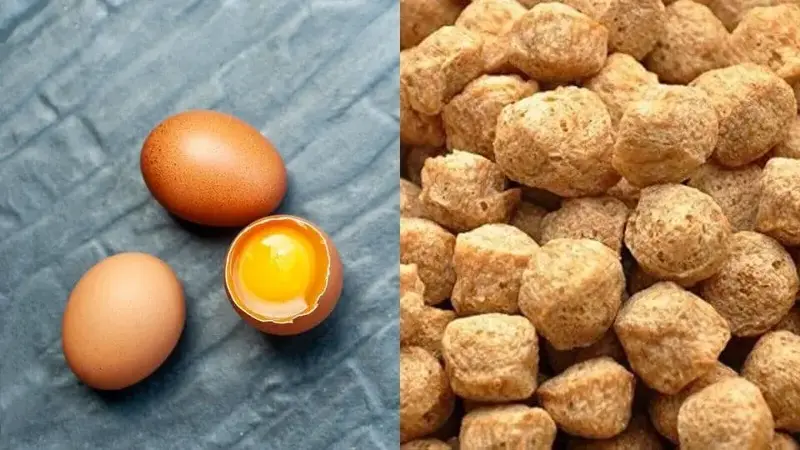
India is home to both vegetarians and non-vegetarians. One question continues to spark debate: which diet is actually better for health? The issue resurfaced on social media after reports claimed that West Bengal's new BJP government plans to replace eggs with soya chunks, paneer, lentils, and other vegetarian-friendly options in mid-day meals in schools.
Eggs vs vegetarian protein sources
According to a PTI report, the WB government plans to engage ISKCON to provide cooked mid-day meals in schools under the Kolkata Municipal Corporation area.
LiveMint spoke to Dr Shabana Parveen, Head, Clinical Nutrition and Dietetics Department at Artemis Hospitals, to understand the nutritional value of eggs vs other vegetarian options for kids.
Dr Parveen explained, “Eggs are one of the most nutritious foods for the growing child. They are a good source of high-quality protein, healthy fats, vitamin B12, vitamin D, choline, iron and other essential nutrients that help with brain development, muscle growth, immunity and healthy vision.”
Soya chunks and other substitutes for eggs
The certified nutritionist clarified that no vegetarian food can serve as a complete nutritional substitute for eggs.
So, how can vegetarians ensure the right nutrition? The doctor suggested alternatives, “A well-planned vegetarian diet, which includes soybeans, paneer, milk, curd, lentils, beans, nuts and seeds, can provide all the nutrition to a child. However, you need to plan your meals carefully, because no vegetarian food can replace all the nutrients found naturally in eggs.”
Protein requirements for children
On average, children between one and three years of age need about 13 grams of protein per day, according to the doctor. On the other hand, children between four and eight years of age need 19 g a day, and older children need 34 g or more a day.
A combination of cereals with pulses, along with milk, curd, paneer, soy products, nuts, and seeds, helps provide all essential amino acids for those seeking vegetarian, protein-rich food.
“It is more important to eat a balanced and varied diet than to rely on one protein source,” warned the doctor.
Protein comparison: 100 g soya vs eggs
Commenting on the ongoing debate on replacing eggs with paneer and soybean in mid-day meals, recently, ISKCON Kolkata Vice President and spokesperson Radharaman Das said, “100 g of egg contains 13 g of protein. In contrast, 100 g of soya chunks contains 52 to 54 g of protein, which is significantly higher.”
He added that while lentils contain 25 g of protein, paneer contains 22 g.
While fact-checking the claims, Dr Parveen points out, “The protein values are about right but need to be put into context.”
She adds, "Dried, uncooked soya chunks have about 50-52 g of protein in 100 g, while dry lentils have about 24-26 g. Paneer typically contains 18-22 g of protein, depending on its preparation, and a whole egg contains about 13 g of protein per 100 g. Protein content alone is not a good way to compare foods. Eggs provide us with highly digestible protein along with choline, vitamin B12 and vitamin D. Soy, dairy and lentils offer valuable nutrients, meaning the overall quality of the diet is more important than protein numbers alone.”
One must note that these nutritional comparisons between eggs, soya and other vegetarian options are presented on a per-100-g basis. However, this may not reflect typical consumption patterns.
Therefore, when comparing the nutritional value of eggs and soya, it is important to consider realistic serving sizes and overall nutritional value.
“It is also important to remember that protein values per 100 grams change after cooking because foods absorb water making the protein less concentrated by weight. 100 grams of egg is roughly equal to two medium to large eggs making it much easier for most people especially children, to consume compared to 100 grams of cooked soya chunks.”
Disclaimer: This article is for informational purposes only and not a substitute for professional medical advice.