



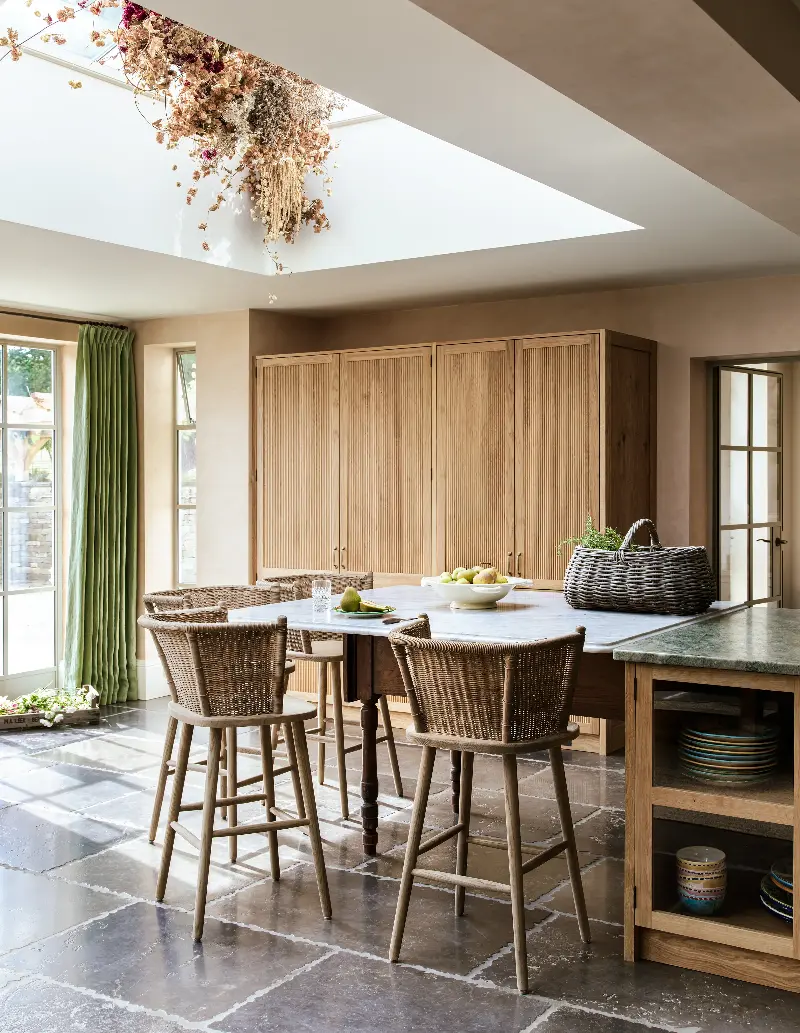
It may not be the most glamorous aspect of your design, but your kitchen flooring does a lot of heavy lifting. It is, quite literally, the foundation of your space, setting the tone for everything that rests upon it. The right flooring color can bring your room to life, establishing a basis of character to build the rest of your design on. But choose the wrong flooring color, and designing the rest of your kitchen will be a never-ending uphill battle.
Although it's unlikely to be the decision that sits at the forefront of your mind when designing a kitchen, overshadowed by materials and colors for your countertops and cabinets, your kitchen flooring plays a highly significant role in the overall design of your space, not just from an aesthetic standpoint, but from a practical one, too. Your kitchen flooring color will have a huge role to play in how low-maintenance your space is; it's the surface that will bear the brunt of the majority of spills and splashes that will happen in your kitchen, so choosing a finish that's more forgiving will go a long way.
Plus, unlike the color of your cabinetry, changing up your kitchen flooring is far from a quick job, so you'll want to make sure you make the right decision the first time around, so you don't come to regret it later. To help you with that, these are the colors our experts recommend you avoid at all costs, as well as what they'd suggest using instead.
1. Flat Grays
Just ten years ago, you'd be hard-pressed to find a chic, modern kitchen that didn't have this flooring color, but in 2026, it's a shade most experts will warn you away from.
You'll be familiar with the look we're talking about, "That slightly blue, concrete-ish gray that once felt like the practical answer to everything," as Grazzie Wilson from Ca'Pietra so aptly describes it.
Once loved for its neutral finish, today, the shade feels overly stark and fails to bring any of the warmth and personality we crave in our interiors. "In a kitchen, it can be a bit of a mood-hoover. It takes the warmth out of timber, makes painted cabinetry look colder than it needs to, and can leave the whole room feeling more like a utility zone than the place everyone naturally ends up leaning against the kitchen island with a glass of something," Grazzie says.
And it's not just Grazzie that feels this way; Fiona Ginnett, from Holte, also lists this shade as one of the ones she'd be quick to recommend against, saying, "I tend to avoid stark, cool-toned flooring, as it can feel a little cold and clinical, particularly in kitchens with limited natural light." It goes against the essence of what we want our kitchens to be nowadays. "As the heart of the home, a kitchen should feel warm, welcoming, and full of character, so I generally gravitate towards flooring that adds depth and a sense of timelessness to the space," she explains.
But it's not just aesthetic reasons that keep the experts from using this material; it's also notoriously hard to care for, and will make your whole kitchen feel far higher-maintenance than it needs to, despite what you may believe. "The funny thing is that people often choose it because they think it will be easy to live with, but a very flat gray can show every crumb, paw print, and splash with surprising enthusiasm," says Grazzie. And in the kitchen, where spills and messes are practically inevitable, the last thing you want is a floor you have to be precious about.
2. Monochromatic Designs
As chic as a monochromatic look can be, when it comes to your kitchen, a full color-drenching moment isn't always the best way to go.
"I would probably swerve anything too matchy-matchy with the kitchen units. You know the sort of thing: navy kitchen cabinets, navy floor; sage cupboards, sage floor; suddenly the whole kitchen looks like it has joined a club and forgotten to invite any other colors," says Lesley Taylor, interior designer and founder at Baked Tiles.
There's an obvious appeal behind this design choice. In theory, a one-color finish feels very striking and modern, but in practice, it can often end up falling slightly flat.
The key to this type of design is a degree of restraint, and once you bring in matching floors, that goes out the window. As Lesley explains, "Floors cover a huge amount of space, so once you have committed to that much of one shade, the room can start to feel a bit heavy, a bit flat, and very hard to change your mind about."
It also leaves you with very little room for the space to evolve. Painting over your cabinets after the next kitchen cabinet trend is one thing, but ripping up your flooring every time you're in need of a change is quite another, and you may come to regret choosing such an un-versatile shade.
3. Dark, Stained Woods
Although dark wood kitchens have been one of the most popular trends of the past year, according to experts, this style works better on your kitchen cabinets than for your flooring.
According to Darwyn Ker, from Woodpecker Flooring, as beautiful as dark wood floors can look at first, over time, you'll likely grow to regret this choice, "because kitchens are hardworking spaces, darker tones can make dust, crumbs, scratches, and everyday marks slightly more visible."
On top of this, a dark floor can often make a space feel narrower and more compact, which is particularly problematic for small kitchens. They also work better in rooms with plenty of natural light, or else you run the risk of ending up with a room that feels dingy and uninviting.
Unlike the other shades, though, this is not a color that experts feel should be avoided at all costs; it's more about ensuring it's suitable for your space before committing to it. As Darywn says, "It is not that dark wood should never be used, but it needs to be a conscious design decision. A kitchen floor has to work with real life, so it is worth choosing a tone and finish that suits the way the room will be used every day."
4. Bright Whites
While all-white kitchens were once seen as the height of sophistication and style, nowadays, experts tend to favor slightly warmer, softer colors, moving away from the sterility you so often find with a flat white finish.
Not just limited to the early 2000's, this style persists today, although the experts seemingly would rather it didn't. It's a style Damla Turgut, founder of Otto Tiles, is far more familiar with than she'd like, saying, "I live in Miami now, and a lot of condos and apartments use very large format white porcelain tiles throughout. They're often chosen because they feel luxurious and sleek and are seen as a versatile foundation for a scheme, but I just find they can feel really impersonal and lacking in character."
A common feature in new builds and characterless renovations, these sleek white tiles bring a sterile harshness that is difficult to mitigate, no matter how many warm tones and natural materials you bring in. It can also create a harsh contrast when paired with an earthy color palette, looking awkwardly out of place and forcing you to follow suit with more cool, bright finishes.
They also couldn't be less practical, showing every last spill and scuff. "Kitchens are such high-traffic spaces and probably require more regular cleaning than any other room in the home. Depending on the material, white floors can show everything from dirt and stains to watermarks and mop marks," says Damla. To make matters worse, if you opt for a porous, natural stone, like marble, the marks won't just show up more prominently, but they'll likely create stains that are impossible to remove.
5. Pure, Jet Black
Another past-favorite, often found in super modern, industrial kitchens and swanky bachelor pad design, a pure black floor has since dropped in popularity, losing the appeal it once held.
Much like with a bright white, this harsh, intense shade can often come off as overly clinical and uninviting in kitchens, missing all the character and personality we tend to crave in a room that's typically designed as a communal, gathering space.
But, while white promises the ability to open up a space, making it feel brighter and more expansive, the darkness of black flooring will have the opposite effect, making a narrow kitchen feel even more suffocating.
While you may think black would be a more forgiving shade, hiding any muddy footprints and tomato pasta splashes, you'll quickly find that this is not the case. In fact, the darkness can actually serve to highlight any mess, making it even more obvious.
Now we've covered all the colors to avoid, it's time to explore the ones the experts are loving at the moment instead; these three kitchen flooring colors are set to be the most popular choices for 2026.