


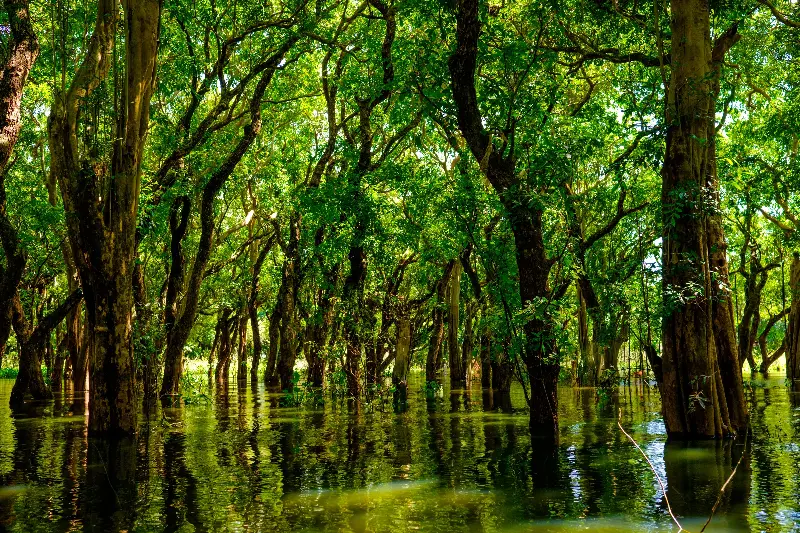
Along the tidal edges where land meets sea, a remarkable kind of forest thrives. Mangroves—with their tangled roots and lush green canopies—are much more than just a backdrop for coastal scenery. Today, as rising seas, intensifying storms, and biodiversity loss pose new threats, mangroves are proving to be our unsung heroes, quietly defending both people and the planet.
WHAT MAKES MANGROVES UNIQUE
Found in over 120 tropical and subtropical countries, mangrove forests are made up of specially adapted trees and shrubs that survive in salty, oxygen-poor environments. Most plants would perish in these conditions, but mangroves have evolved distinct biological advantages:
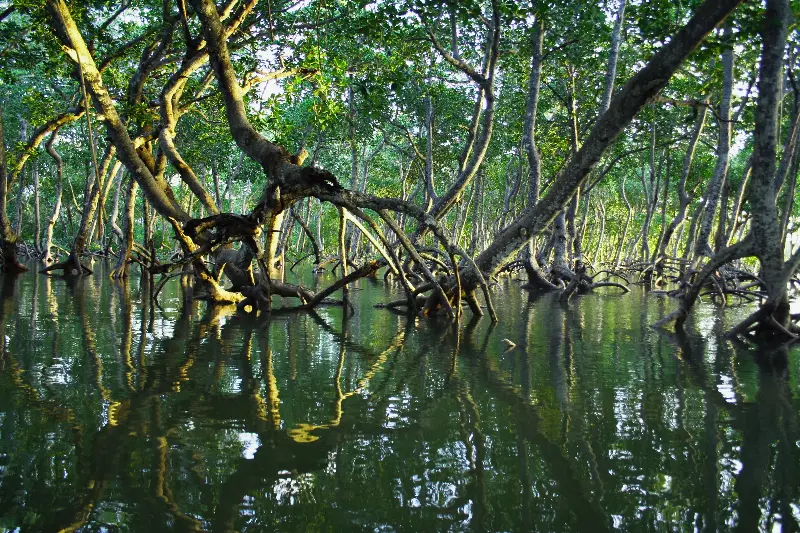
- Pneumatophores: These are "breathing roots" that grow upward out of the mud to absorb oxygen when the tide is out.
- Prop Roots: Curving, above-ground systems that act as both anchors and lifelines, stabilizing shorelines against powerful currents.
- Salt Filtration: Many species can filter out up to 90% of the salt from seawater as it enters their roots.
Each hectare of mangrove is a living powerhouse—soaking up carbon, sheltering wildlife, and feeding communities. These forests play roles no other habitat can claim.
NATURAL DEFENSES AGAINST STORMS AND EROSION
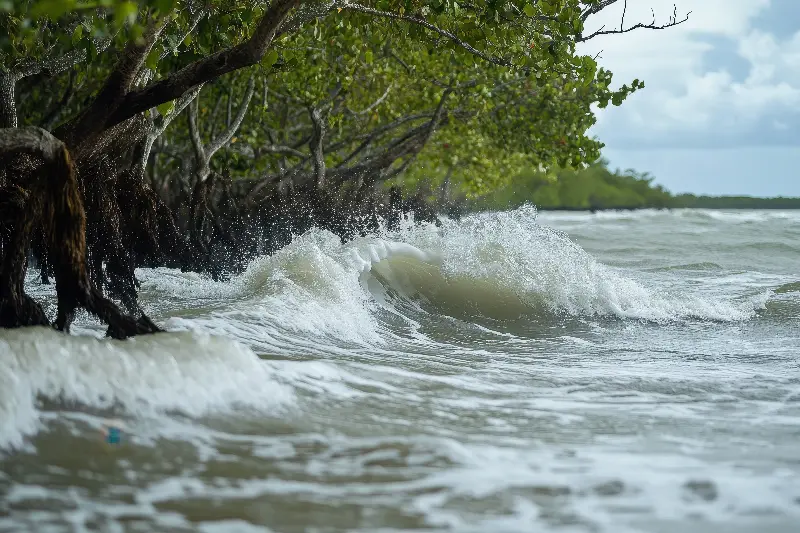
If you live in a coastal area prone to cyclones or hurricanes, mangroves aren’t just pretty—they’re lifesavers. Their dense roots and thick branches break the force of waves and slow storm surges. According to the United Nations Environment Programme, a healthy stretch of mangrove can reduce wave height by up to 66% over a distance of just 100 meters.
The historical evidence is striking:
- The 2004 Tsunami: Villages shielded by mangrove belts suffered significantly less damage and fewer casualties than those where the trees had been cleared.
- Economic Value: Climate scientists estimate that healthy mangroves act as a “natural infrastructure” worth billions of dollars, slashing the costs of artificial sea walls and disaster recovery.
- Sediment Trapping: As tides rise and fall, the roots capture sand and mud, gradually building up the soil to combat land loss and sea-level rise.
BIODIVERSITY HOTSPOTS AND FISH NURSERIES
Take a closer look at the muddy channels and you’ll find a world teeming with life. Mangroves act as vital nurseries for juvenile fish, crabs, shrimp, and mollusks. Research suggests that up to 75% of commercially caught fish in tropical regions spend at least part of their life cycle in these forests.
The biodiversity is staggering:
- Over 1,500 species of plants and animals have been identified within mangrove habitats.
- Iconic Wildlife: These forests support birds, crocodiles, monkeys, and even the Royal Bengal tigers of the Sundarbans.
- Human Livelihoods: For millions, this biodiversity translates into small-scale fisheries, honey collection, and sustainable eco-tourism.
MANGROVES AND CLIMATE CHANGE: CARBON SINKS THAT MATTER
While tropical rainforests are often called the “lungs of the planet,” mangroves are increasingly recognized as some of the world’s most efficient carbon sinks.
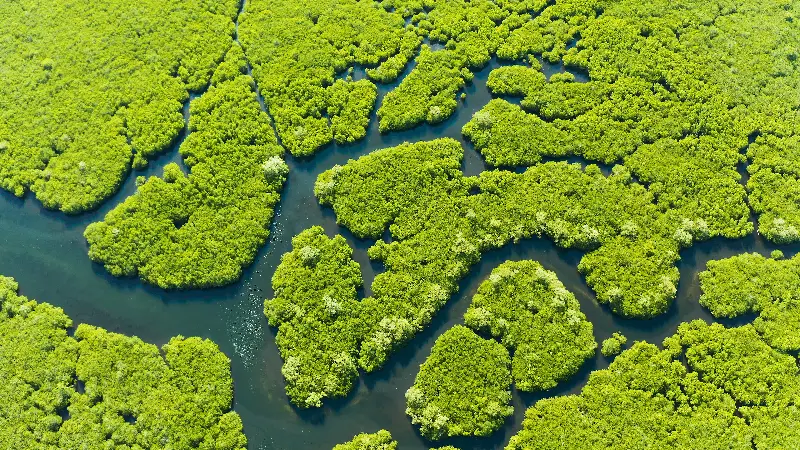
When mangroves photosynthesize, they pull carbon dioxide from the atmosphere and store it—sometimes for centuries—in waterlogged soils. A single hectare of mangroves can store up to four times more carbon than the same area of mature upland rainforest. This “blue carbon” is especially valuable because the submerged, anaerobic soils prevent the stored carbon from being released back into the atmosphere.
However, there is a catch: When mangroves are destroyed, the vast stores of accumulated carbon are released, contributing directly to global emissions.
