


Imagine stepping into an ancient Roman street, observing the bustle of daily life, hearing merchants call out in Latin, and exploring magnificent buildings—without ever leaving your classroom. Or consider dissecting a virtual frog, seeing every organ respond to your touch, and rewinding your actions to understand intricate biological systems. These scenarios aren’t science fiction—they’re the tangible reality being crafted by virtual reality (VR), a technology rapidly rewriting the rules of the global education landscape.
The Power of Immersion: Beyond Traditional Learning
One of the most dazzling features of VR in education is immersion. Forget static textbook images or passive video watching; students using VR are transported into three-dimensional environments where learning becomes an active, all-encompassing experience. Instead of just reading about physics principles, for example, learners can step inside a simulated laboratory to manipulate virtual particles, observe outcomes, and gain real intuition about complex phenomena.
Research across continents suggests that immersive experiences boost memory retention and engagement. A study by PwC found that VR learners were four times faster to train than in-class learners and felt 275% more confident to apply skills after training. The immersive element makes concepts “stickier,” meaning students remember more, understand better, and are excited to participate.
Expanding Accessibility: Education Without Borders
For years, a student’s postal code has often determined their access to quality education. VR is breaking down these barriers in extraordinary ways. A child in a rural region of India can now take a virtual field trip to the Louvre Museum in Paris, analyze authentic dinosaur fossils, or peek inside the workings of the International Space Station. Language is less of a barrier too, as VR applications increasingly feature real-time translation and localization options.
Perhaps most impressively, VR enables hands-on learning where real-world resources are scarce. In places where performing dangerous chemistry experiments is impossible or costly, a safe VR lab lets every student practice repeatedly, gaining confidence and competence. This democratization of educational opportunity is a game-changer—VR doesn’t just complement traditional classrooms; it helps ensure every learner, regardless of geography or privilege, can access transformative experiences.
Engaging a New Generation of Learners
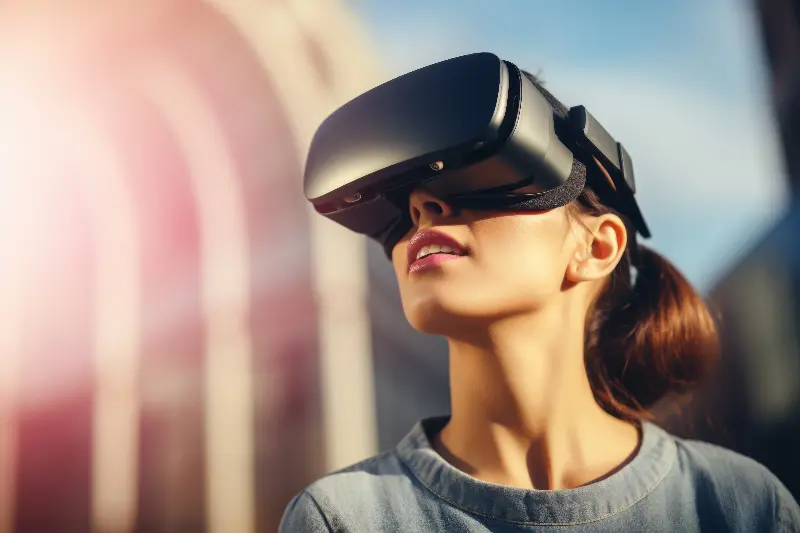
Today’s students are digital natives. They’ve grown up with touchscreen devices, on-demand information, and interactive media. VR taps right into this mindset, making learning feel like a thrilling adventure. NASA, for example, has launched VR simulations that let young people train like astronauts, solve coding challenges aboard virtual spacecraft, and spark a lifelong love of science and engineering.
Gamification is another powerful force at play. Educational VR modules often include scoring systems, badges, and rewards, creating a positive feedback loop that motivates students to push their limits. Teachers report higher levels of attention and enthusiasm during VR sessions, as well as deeper peer collaboration—a welcome breath of fresh air for group projects and problem-solving tasks.
Real-World Skills and Career Preparation
Virtual reality isn’t just about abstract concepts; it’s also reshaping vocational and skills training worldwide. Medical students use ultra-realistic VR simulations to practice surgeries with zero risk, building muscle memory before they even touch a real patient. In aviation, trainee pilots log thousands of virtual hours in detailed cockpit replicas, mastering maneuvers and emergency protocols with stunning accuracy.
Even soft skills benefit from this new world. VR scenarios can put learners in simulated job interviews or customer service encounters, allowing them to practice communication, empathy, and conflict resolution in a stress-free space. The result is a generation of graduates better prepared to tackle diverse challenges in the actual workplace—ready to collaborate, problem-solve, and adapt creatively.

Challenges and the Road Ahead
Of course, integrating VR into education isn’t without hurdles. The initial cost of hardware and software remains a concern for some schools, though prices continue to drop as technology matures. There are also important questions about screen time, digital well-being, and making these experiences inclusive for students with disabilities. Still, new lightweight devices, improved accessibility features, and collaborative initiatives among governments and tech companies are fast-trackingsolutions.
What’s even more exciting is the innovation at hand. Educational VR is not standing still—developers are experimenting with tactile feedback (“haptics”) that mimics touch, eye-tracking to personalize learning, and artificial intelligence to provide instant feedback or adapt challenges on the fly. The pace of progress means classrooms a few years from now could be barely recognizable compared to today’s.
Across the globe, educators and learners are embracing VR not just as a tool but as a fresh canvas for creativity, curiosity, and connection. Physical classroom walls are dissolving, making way for limitless learning—where your desk can become a launchpad to anywhere, and your next lesson is only a headset away.
As we look to the future, one thing is certain: the rise of virtual reality is transforming education from a place you go to an experience that meets you wherever you are—fueling imagination, courage, and a love of learning that knows no bounds.