


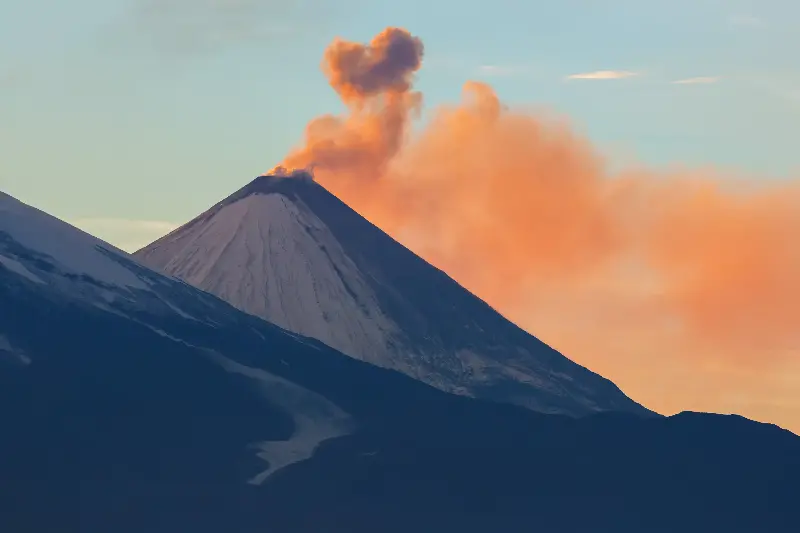
When the ground started shaking on Russia’s Kamchatka Peninsula, few expected that the disaster would only intensify. Shortly after a mighty 8.8 magnitude earthquake struck the far east, the Klyuchevskoy volcano, one of the world’s tallest and most active, erupted in dramatic fashion—filling the sky with ash, fire, and uncertainty.
Eyewitness Yaroslav, 25, of Petropavlovsk-Kamchatsky, described those tense minutes: “It felt like the walls could collapse any moment. The shaking lasted continuously for at least three minutes”. The atmosphere was heavy with anxiety as emergency sirens sounded and people rushed to evacuation shelters in towns as far as Hawaii and Japan, reminded of the devastating 2011 Pacific tsunami. In Kamchatka, the air buzzed with equal parts fear and awe as the volcano’s explosions lit up the twilight.
Key Facts and Developments
Scientists from Russia’s Academy of Sciences had warned that Klyuchevskoy was restless—indeed, a lava lake had appeared at the summit just days earlier, hinting at a possible eruption. The earthquake, whose epicenter lay just offshore, seemingly triggered the volcano’s fury.
-
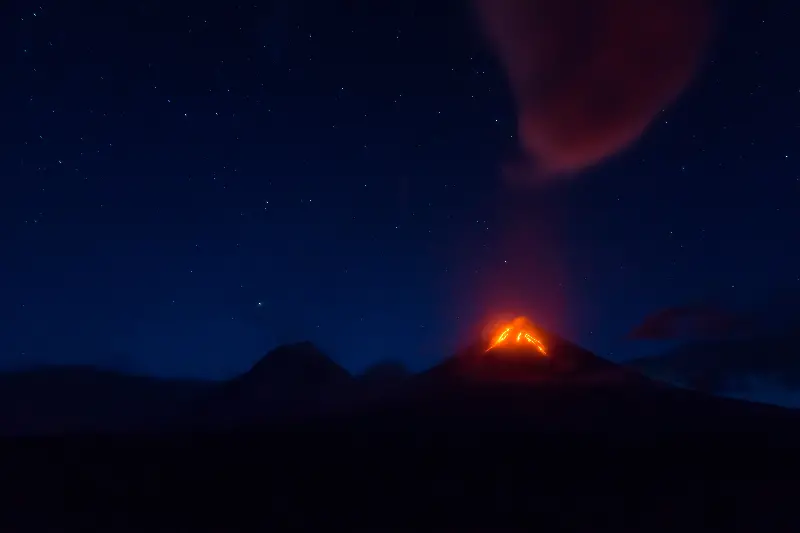
Lava flowed down the volcano’s western slope, illuminating the area for miles. Spectators watched “a powerful glow above the volcano” and listened to the thunderous rumble of explosions.
-
The ash plume extended over 1.5 miles skyward and drifted some 36 miles east, sparking health warnings and concerns for aviation safety.
-
Tsunami alarms blared across the Pacific, flooding Kamchatka’s ports, submerging shorelines, and even disrupting daily life in Japanese and Hawaiian cities.
-
Fortunately, despite widespread building damage, no fatalities were reported in Russia; the solid construction and alert systems held firm, providing relief amid the chaos.
-
Authorities in French Polynesia and the Kuril Islands urged residents to move to higher ground as waves up to 5 meters battered coasts.
As news spread, crowds gathered at safe vantage points to watch the unfolding spectacle, many filming the “river of fire” snaking down Klyuchevskoy’s side. Excitement mixed with dread: “It’s like hell opened up,” one local told a reporter, capturing the scene’s surreal intensity. Even as evacuations continued, some tourists refused to leave—drawn in by the raw power of nature.
Takeaway: Nature’s Raw Power and Human Resilience
The saga of the Klyuchevskoy eruption is a reminder of the awesome, unpredictable power of nature—and of the resilience shown by communities facing disaster. While many watched in terror, others gazed up in wonder at the fiery display. Emergency crews, scientists, and everyday people all played their part in ensuring safety and minimizing loss.
-
The Klyuchevskoy volcano remains a symbol of both threat and beauty in Eurasia, standing 4,750 meters tall and now—once again—a living, breathing force to be reckoned with.
-
Authorities continue to monitor volcanic activity and assess longer-term impacts as air travel and local economies grapple with the disruption.
-
Residents, now recovering from the quake and eruption, are finding comfort in shared experience, strong infrastructure, and the knowledge that vigilance can save lives.
Additional credible coverage: