


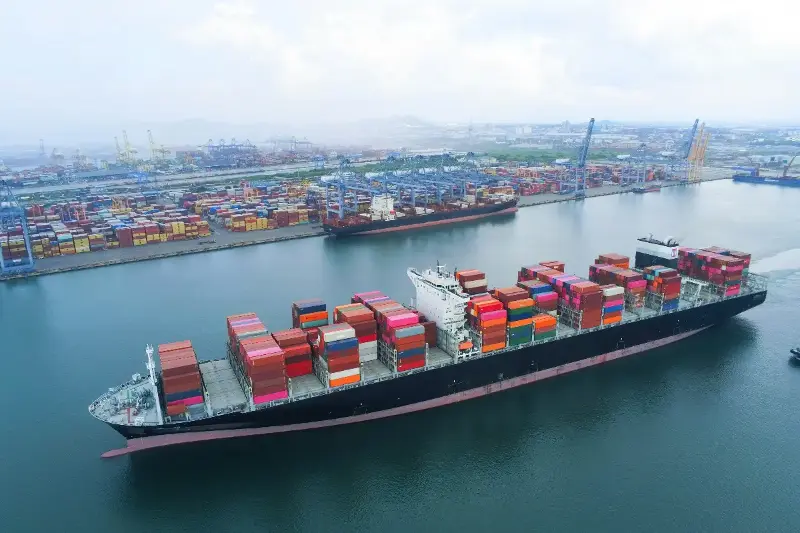
A giant steel ship can weigh more than 200,000 tonnes, carry thousands of people or containers, and still sit calmly on the ocean surface. At first glance, it seems impossible. Steel is much denser than water, so a solid block would sink immediately.
The answer lies not in the steel itself, but in the ship's overall shape, total volume, and the water it pushes aside.
The Basic Physics of Floating
A ship floats because it is engineered as a huge, mostly hollow structure. Its hull contains vast spaces filled with air, machinery, cargo, cabins, and tanks. When all these parts are considered together, the ship's average density becomes significantly lower than the density of the water around it.
The foundational explanation comes from Archimedes' Principle, discovered more than 2,000 years ago:
- The Law: An object placed in a fluid experiences an upward force equal to the weight of the fluid it displaces.
- The Application: Ocean water pushes upward against the hull. As the ship enters the sea, it forces water out of the way.
- The Balance: Displaced water exerts an upward buoyant force. When that force equals the total weight of the ship, the vessel floats.
Large vessels do not float "on" water the way a light leaf does. They float partly submerged, perfectly supported by the upward pressure of the liquid surrounding their hulls.
Why Steel Does Not Automatically Sink
To understand why steel ships stay afloat, consider the difference in densities:
- Steel: Roughly 7,850 kg per cubic metre
- Fresh Water: Roughly 1,000 kg per cubic metre
- Seawater: Roughly 1,025 kg per cubic metre
Because a solid steel cube is far denser than seawater, it drops like a stone. Shipbuilders overcome this by spreading steel over a very large overall volume.
Think of a simple steel bowl placed in water. Although made of heavy metal, its hollow shape traps air, lowering its average density below that of water. A modern cargo ship works on the exact same idea—just on a massive scale. Inside the hull are vast empty spaces, including cargo holds, engine rooms, living quarters, and double-bottom compartments.
Displacement and Draft Measurements
Maritime engineers rely on specific terminology to track a ship's buoyancy and weight:
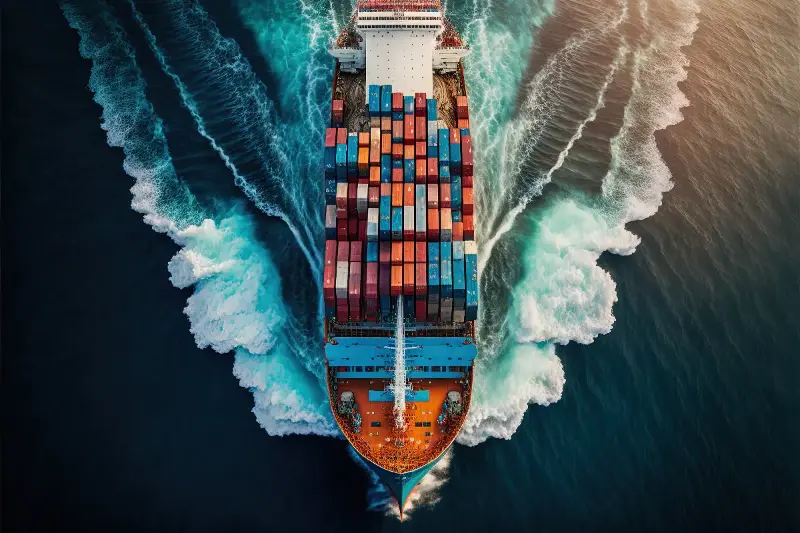
- Displacement: The actual weight of water a ship pushes aside. If a vessel displaces 50,000 tonnes of water, the entire vessel weighs exactly 50,000 tonnes (including steel structure, equipment, crew, and cargo).
- Draft: The vertical distance between the waterline and the bottom of the hull. As cargo is loaded, the ship grows heavier, sits deeper, and its draft increases.
- Plimsoll Markings: Special load lines painted on the hull showing the maximum safe depth for different water types. For instance, cold seawater is denser and provides more buoyancy than warm freshwater.
Hull Shape and Stability
Floating is only half the battle; a ship must also stay upright in rough oceans. Stability depends heavily on hull shape and weight distribution.
When a ship rolls to one side, its submerged shape changes, shifting the centre of buoyancy. If designed correctly, this push automatically rights the ship.
Engineers place heavy machinery and storage low in the vessel to keep the centre of gravity down. A vessel with too much weight high above the waterline risks becoming top-heavy. Architects must carefully balance speed, fuel efficiency, cargo capacity, and safety when picking a hull profile.
The Role of Ballast Tanks
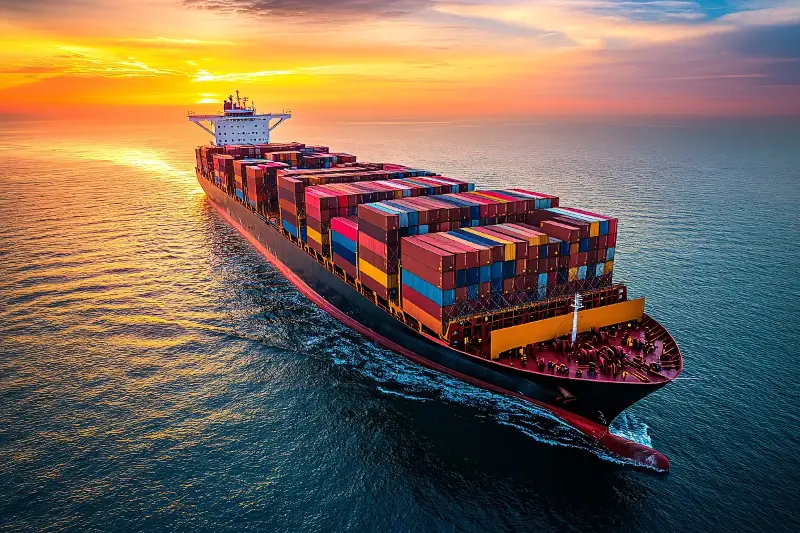
Ships do not always carry the same payload. A container vessel might leave port fully loaded and return with empty holds. Without adjustments, a light ship sits too high in the water, making it unstable and hard to steer.
To solve this, vessels utilize ballast tanks—internal compartments filled with seawater to add low-lying weight:
- Draft Control: Keeps the ship sitting at an optimal depth in the water.
- Stability: Lowers the centre of gravity to prevent excessive rolling.
- Environmental Safety: Modern vessels feature treatment systems to disinfect ballast water before discharge, preventing invasive marine species from spreading across ecosystems.
Modern Compartment Safety
A ship floats safely only while its hull maintains enough enclosed, air-filled volume. If water enters large internal spaces, it replaces air and increases average density.
To prevent catastrophic flooding, modern hulls are divided into watertight compartments. If one section is breached, automatic bulkheads seal off the damage to limit water spread. Combined with advanced monitoring systems and high-capacity pumps, these engineering controls ensure that even if a vessel takes on water, its buoyant volume remains high enough to keep it afloat.