


When you think of storks, what comes to mind? Perhaps a nostalgic vision of a long-legged bird gracefully gliding across a spring sky, or maybe memories of fairy tales where these majestic creatures deliver bundles of joy to new parents. Storks have inspired awe, reverence, and curiosity for millennia, making them one of the world’s most fascinating birds—both in myth and reality. Let’s journey through the surprising world of the magnificent stork, from ancient legends to the vital roles they play in our modern ecosystems.
Mystique And Mythology: The Stork In Human Culture
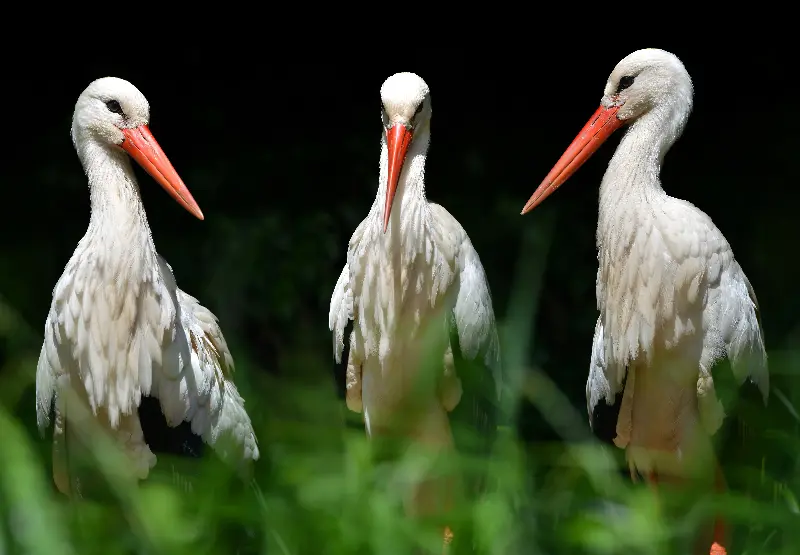
Long before science unveiled the secrets of migration and animal behavior, storks held a special place in the human imagination. In ancient Greece and Rome, the stork was associated with devotion and familial duty. The belief was so strong that the famous "stork law" was passed, obliging children to care for their elderly parents—reflecting the stork's observed habit of tending to its own parents in the nest.
No discussion of storks would be complete without mentioning their most enduring myth: the delivery of babies to expectant parents. This whimsical tale can be traced back to Northern European folklore, particularly in Germany and Scandinavia. It was believed that storks found babies in caves or marshes, carried them in a cloth bundle, and delivered them to homes by depositing them down the chimney. The association likely grew from the birds’ habit of nesting on rooftops and chimneys, easily visible to superstitious villagers.
Storks also grace the folklore and spiritual beliefs of Asia and Africa. In Japan, they are symbols of longevity, happiness, and fidelity. In ancient Egypt, the stork was linked to the soul because of its migratory nature, leading to the belief that the soul—like the stork—would return after leaving the body.
Storks In The Wild: Masters Of The Sky And Wetland
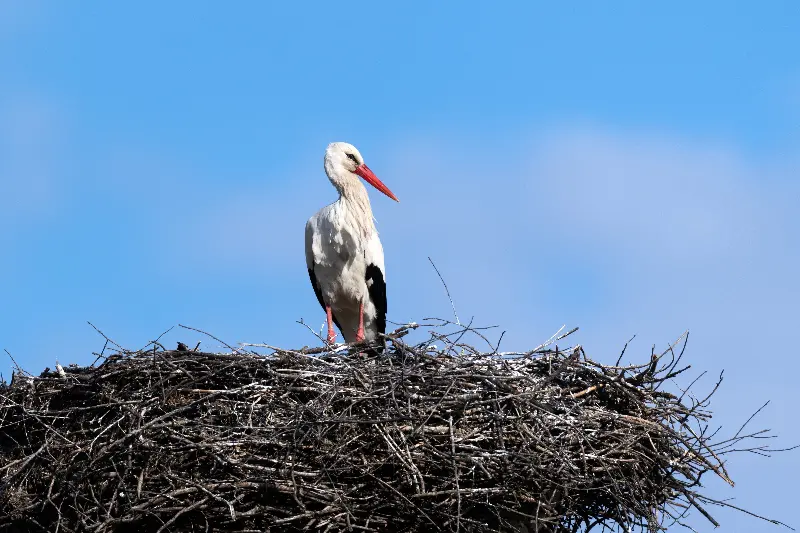
While legends bring an element of magic, the reality of storks is no less remarkable. There are 19 species of storks, each boasting their own unique adaptations. The most iconic, perhaps, is the white stork (Ciconia ciconia), recognized by its white plumage, black wing feathers, long red legs, and dagger-like bill. Its cousin, the black stork (Ciconia nigra), prefers tranquil, wooded wetlands and is more elusive, offering lucky bird-watchers a rare treat.
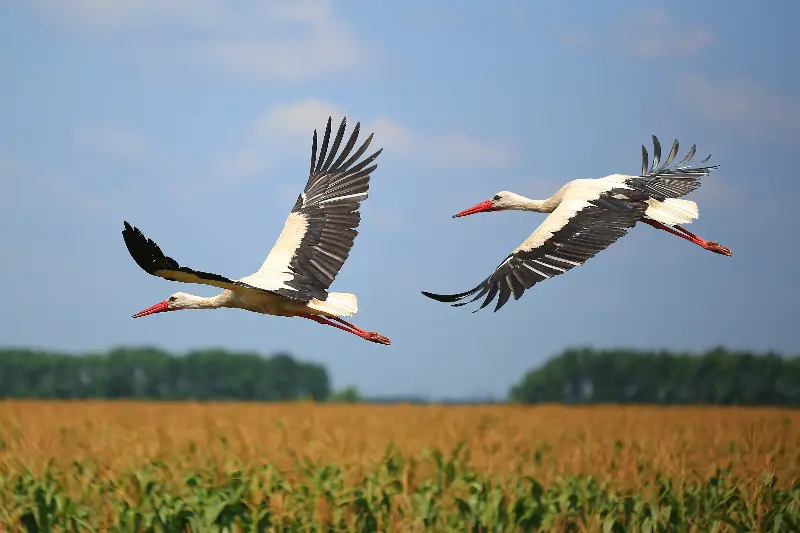
Storks are famous for their impressive migratory journeys. Twice a year, millions of storks travel from Europe to Africa and back, covering distances up to 10,000 kilometers. Unlike many other birds, they are heavy and cannot sustain long flights flapping their wings. Instead, they rely on thermal currents—upward spirals of warm air—to glide for hours with minimal effort. Observing storks "thermaling" in vast spirals is a breathtaking sight that has mesmerized generations.
Diet-wise, storks are nature’s clean-up crew. They feed on fish, insects, amphibians, reptiles, small mammals, and even little birds. Their varied diet helps control pests and maintain ecological balance in wetlands and grasslands.
The Art Of Parenting: Lifelong Bonds And Nesting Rituals
The family values that inspired ancient laws have truth in stork behavior. Many species of stork are monogamous, returning to the same mate season after season. Their elaborate courtship dances include bill-clattering, a resonant and distinctive stork "song" produced by snapping their powerful beaks rhythmically together.
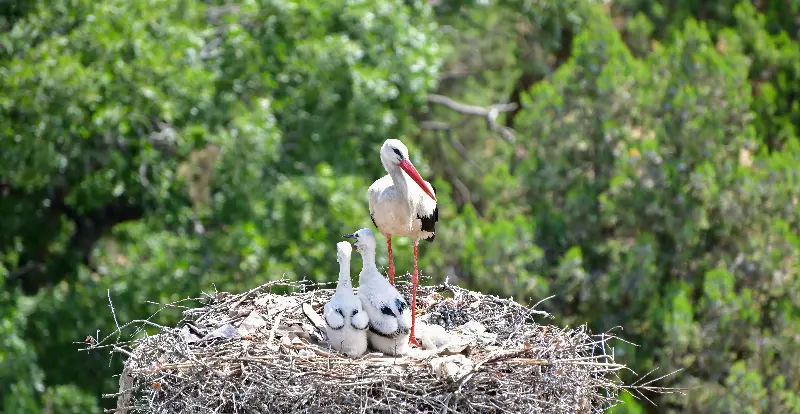
Stork nests are architectural wonders. Built atop trees, rooftops, or utility poles, these massive structures can weigh several hundred kilograms and be used—and expanded—year after year. Some have grown so large they become landmarks in village squares. Observers are often amazed by the dedication storks show to their eggs and chicks, with both male and female sharing incubation duties and never leaving the nest unguarded for long.
Once hatched, the stork chicks rely completely on their parents for food and protection. Adult storks regurgitate food into the nest, and their attentive care has understandably been noted by many human cultures as a symbol of parental love and sacrifice.
Storks In Modern Times: Conservation And Challenges
Despite their resilience and adaptability, stork populations have faced threats from human encroachment, habitat loss, and pollution. Wetland drainage, overhead power lines, and pesticide use have pushed some local populations to the brink. But there’s good news: thanks to conservation efforts and public interest, the white stork has made a remarkable comeback in many parts of Europe.
Community nest boxes, wetland restoration, and protection of migration corridors have all helped storks reclaim their ancient territories. In some towns, the return of storks is celebrated with festivals, and stork nests are carefully preserved even when buildings are renovated.
People continue to be inspired by these charismatic birds. With live "stork cams" streaming their nesting rituals worldwide, it’s never been easier for anyone to witness the everyday heroics of these remarkable animals—and perhaps, find a deeper connection to the legends of our past.
Storks remind us that nature's wonders can be both extraordinary and rooted in real-life heroism. They connect cultures and continents, carry stories on their wings, and prove that even a tale as mythical as baby delivery can have a kernel of truth born of devotion, resilience, and timeless beauty.