



Education has undergone a remarkable evolution over the past century. Not so long ago, students learned their lessons in classrooms lined with wooden desks and black chalkboards. A stern teacher would preside, chalk in hand, ready to inscribe knowledge onto dark slate surfaces. Today, most classrooms hum with the soft glow of laptop screens and the crisp click of interactive whiteboards, blurring the border between learning and technology. Yet amid these sweeping changes, one truth remains constant: the irreplaceable impact of inspired teachers. In a world of digital devices and online resources, great teachers are more essential than ever.
The Shift From Chalkboards to Clicks
Noted social historians point out that the classic classroom setup—rows of desks facing a chalkboard—predominated well into the late 20th century. Learning was largely passive; teachers held the knowledge, and students absorbed it. But the advent of computers and the internet transformed spheres both inside and outside the classroom. Today, with just a few clicks, students can access infinite information, participate in virtual discussions, or solve math problems using interactive simulations.
Modern teaching spaces are filled with smart boards, tablets, e-books, and wi-fi connections. A 2022 survey found that more than 85% of teachers in developed countries routinely use digital devices for class activities. There are virtual field trips to museums on the other side of the world, collaborative online projects connecting classrooms from different continents, and instant language translation apps blossoming in multicultural schools. The tools of education have never been more varied or exciting.
The Digital Divide and The Human Touch
Despite this dazzling array of technology, there’s a critical caveat: technology alone does not guarantee learning. While the internet opens doors, not every student walks through them confidently. Some lack reliable access to digital devices at home, while others get lost in the sheer volume of information. Studies consistently reveal that outcomes are best when technology is guided by purpose—and skilled, caring teachers.
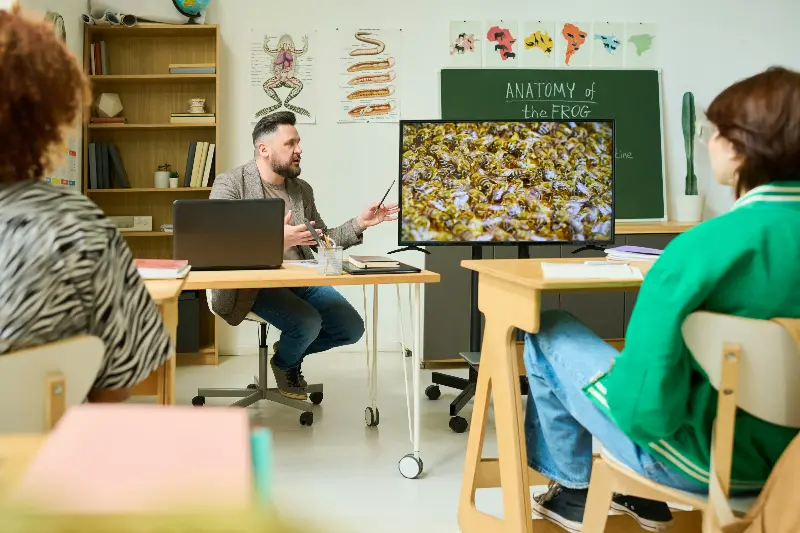
This is where the magic of inspired educators comes in. The best teachers don’t just present information; they spark curiosity and use technology as a tool, not a crutch. They design blended lessons that combine digital learning with real-world exploration. They encourage hands-on experiments, lively debates, and creative projects. Research shows that students with enthusiastic, engaged teachers are more likely to develop critical thinking skills and a lifelong love of learning—qualities that even the most advanced gadget cannot instill on its own.
Teaching for Connection in a Fast-Paced World
Life moves faster now than ever before. Children and teenagers are bombarded by social media feeds, non-stop notifications, and a dizzying mix of entertainment and information. It’s not just teachers who must capture attention—the entire world is competing for it. The result? Teachers now play a new role: they are not just conveyors of content, but guides, motivators, and mentors.
Inspired teachers know how to build real connections that go beyond academic instruction. They listen to their students’ questions, foster a culture of respect, and recognize each child’s unique strengths. Neuroscientists have shown that students retain more information when they feel emotionally connected to what they are learning. Teachers who cultivate a supportive environment help students to be more confident, resilient, and empathetic—traits crucial for navigating a rapidly changing society.
Adapting Pedagogy for the 21st Century
One of the most exciting shifts in modern education is the move toward student-centered learning. Gone are the days when teachers simply “taught to the test.” Innovative pedagogies now prioritize creative problem-solving, teamwork, and adaptability. Flipped classrooms, inquiry-based lessons, and personalized learning paths empower students to take charge of their own educational journeys.
But making this work requires more than just technological upgrades. It demands educators who are lifelong learners themselves, quick to adapt, and eager to experiment with new methods. Teachers are attending professional workshops, connecting with global teaching networks, and harnessing the power of social media to share best practices.
Examples abound: in Finland, teachers design lessons to foster creativity rather than rote memorization. In Japan, educators frequently collaborate and reflect on teaching strategies together. Across the world, successful teachers are those who can blend innovation with tradition—drawing on classic teaching wisdom while embracing the tools of today.

Why Inspired Teachers Are Irreplaceable
Unlocking a young person’s potential takes more than access to the latest technology. It requires a teacher who sees the possibilities in every student, who dares to try new things, and who never stops believing in the power of education to change lives. No app can inspire a student to persevere after failure or celebrate a hard-won success quite like a dedicated teacher can.
Perhaps more than ever, as education races ahead with new tools and techniques, the role of inspired teachers has become increasingly vital. They hold the key to turning a digitally rich classroom into a thriving community of thinkers, creators, and future leaders. As we look to the future, let’s remember: it’s not just the clicks, but the caring and curiosity of teachers, that truly light the way for the next generation.