


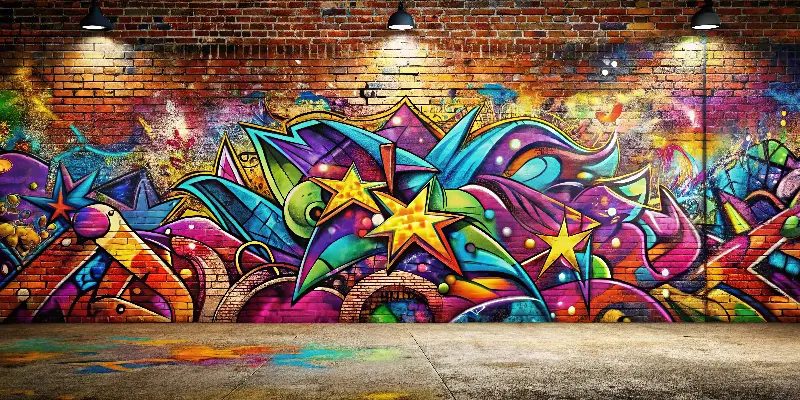
Few expressions of creativity stir as much debate or fascination as graffiti. Once dismissed as mere vandalism, what we know now as street art has a story stretching back thousands of years, tracing human desire for self-expression on shared spaces. Today, graffiti is as likely to be found in galleries as on city walls, with artists celebrated across the globe. So how did this art form go from ancient wall markings to a worldwide cultural phenomenon?
Roots in Ancient Civilizations
Long before aerosol cans and urban subways, graffiti’s spiritual ancestors adorned the walls and monuments of great civilizations. In the ancient city of Pompeii, visitors would have spotted witty scrawls and even political slogans etched onto the town’s walls—remarkably similar in spirit to the graffiti of modern times. Some messages boasted about gladiator victories, while others declared love or dissatisfaction with daily life. Researchers have cataloged nearly 11,000 examples from the city alone, showing just how widespread (and cheeky) these markings were.
Travel even further back to ancient Egypt, and you’ll find that workers left their own carved messages on temples and tombs, sometimes to claim ownership, sometimes to mock their supervisors, and sometimes just for fun. Graffiti became a way for ordinary people—whose voices might otherwise have been lost to history—to reach across millennia.
The Birth of Modern Graffiti: New York City in the 1970s
Though humans have always scribbled on walls, graffiti as we recognize it burst onto the world stage in 1970s New York. Amidst urban decay and growing inequality, young people—often from marginalized neighborhoods—found spray paint to be a powerful tool for crafting an identity in a city that didn’t always listen.
The first “taggers” like Taki 183 became legends by writing their nicknames and street numbers in as many places as possible, especially on subway trains that snaked through all five boroughs. It turned the subway system into a moving gallery, and a little-known teenager’s name could become citywide graffiti lore almost overnight.
Not long after, “writing” evolved. Instead of simple tags, artists developed elaborate, colorful “pieces” (masterpieces), incorporating bold calligraphy, cartoon characters, and increasingly complex styles. Graffiti crews formed, competing for the most prominent and hardest-to-reach spaces, their work blending artistry, risk, and a desire for recognition.
From Outlaw to Icon: Graffiti Goes Global
What started on New York streets spread like wildfire. By the 1980s, graffiti had jumped across the Atlantic, blossoming on London trains, Berlin walls, and Paris buildings. Each city gave birth to its own homegrown talent, flavor, and codes—French artists played with surrealism, while Berliners, painting after the fall of the Berlin Wall, merged political messages with striking visuals in the years when reunification was still fresh.
As hip-hop music exploded worldwide, graffiti became one of its core elements, inseparable from DJing, MCing, and breakdancing. The culture’s influence reached Tokyo, Rio de Janeiro, Johannesburg, and Melbourne, inspiring artists on every continent to pick up spray cans and stencil their stories on local walls.
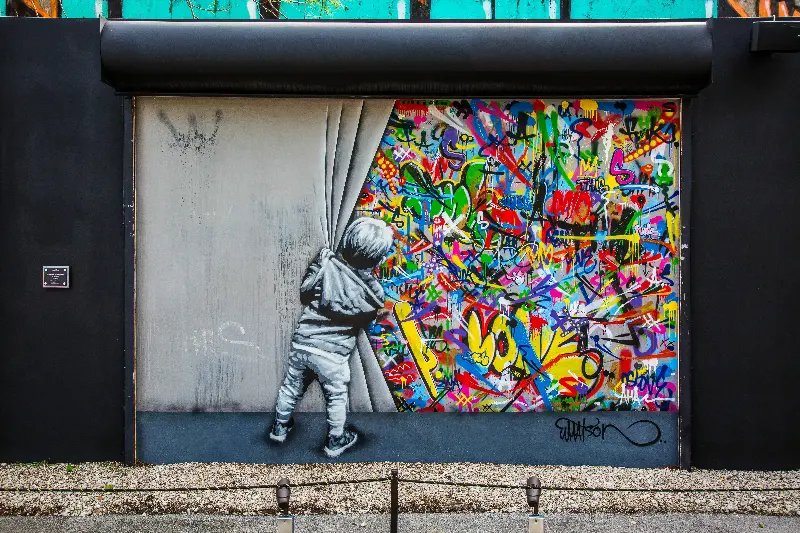
With the 2000s came another shift. Graffiti’s bold new cousin, street art, fused traditional mural painting, stenciling, wheat-pasting, and 3D installations. Suddenly, images like Banksy’s politically charged stencils in England or Os Gemeos’ whimsical characters in Brazil found critical and commercial acclaim. Galleries, brands, and even city councils invited artists to transform drab urban spaces into open-air museums. Nowadays, cities like Melbourne and Berlin are known for their curated street art tours, drawing international tourists eager to experience art in the wild.
Graffiti Today: Art, Protest, and Community
In the 21st century, graffiti occupies a curious space—part outlaw culture, part prized attraction. For many, it remains a form of protest. Murals raise voices about climate change, racial injustice, or government oppression. In 2011, during the Arab Spring, Egyptian artists stenciled images of revolution, turning city walls into real-time chronicles of hope and resistance.
At the same time, street art festivals and legal walls provide a canvas for experimentation and skill-sharing. Events like Miami’s Art Basel or Bristol’s Upfest invite the world’s top talent to paint massive, sanctioned murals that bring communities together and give neighborhoods new life. Social media, meanwhile, amplifies artists' messages, allowing local works to go viral and inspiring new generations of painters, photographers, and fans worldwide.
True to its rebellious roots, graffiti remains controversial—sometimes erased overnight, sometimes preserved as cultural treasures. Arguments over what’s “just vandalism” and what’s true art remain lively. But for many, graffiti has become an essential part of the cityscape: a vivid record of urban life, energy, and creativity that refuses to be tamed.
